

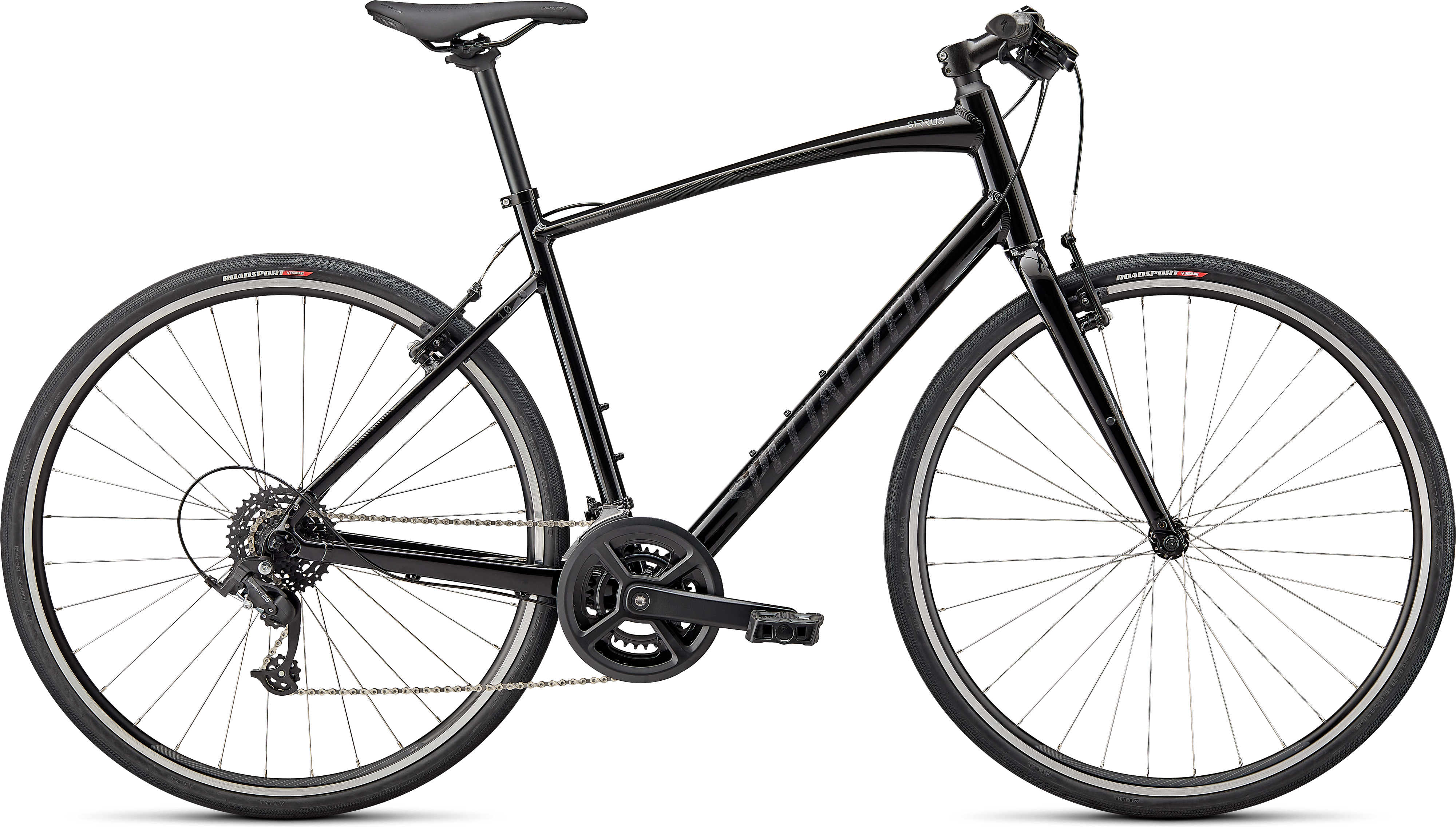

Easily
the most important aspect of selecting a new bike is achieving the right
fit. Forget the in’s and out’s of titanium, steel or aluminium, ignore
the road tests and race wins. One thing matters more than anything else
when you select your new bike and that is that it fits you!
Many cyclists and bicycle dealers are fixed only on the size of the
frame. The frame geometry (which is more than just the size of the frame)
is only important when adjusting the bicycle, in order to get the three
contact parts of the body in the right interrelated proportion. Although
we are setting up bikes for body position, when selecting a bike one
should also consider handling (frame geometry) and rider comfort (shoes,
seat and bars).
True,
setting up your ideal position on a bike takes some time, and can be
difficult. Why? We cyclists hear conflicting advice, and conflicting
formulas, on sizing and positioning. Variances in body sizes and proportions,
in levels of fitness and flexibility, in technique and style, all affect
a cyclist’s best position on the bike.
Where
do you learn how to fit yourself correctly on the bike? I have found
useful sizing and positioning information from;
Coaches
and racers like Eddie Borysewicz, Greg LeMond
Racing
since 1973
Working
in the retail Bicycle Industry from 1986 fitting riders to their bikes
Teaching
and Coaching MTB and Road skills
Research
of other peoples methods during my cycling career.
Although
it may seem like rocket science because there are
so many measurables, there is a fundamental simplicity that we
are working with for your position on the bike with only three
points of contact between you and the bike, Crank, Seat and Handlebar
relationships.
Fitting
from body measurements can provide a good starting position.
However, to set you up on a bike that feels like a natural extension
of yourself we may need to make minor adjustments, to allow
for individual flexibility, range of motion, and other bio-mechanical
variations.
The
best frame size for a cyclist is as small vertically as possible,
with enough length horizontally to allow a stretched out, relaxed
upper body. This frame will be lighter and stiffer than a larger
one, and will handle better and be more comfortable than a smaller
one.
The formulas discussed
here relate to fitting for "normal" road and mountain bike
for sport / performance riding. Time-trial, triathlon, criterium, cross
country are closely related for position, other special events
like Downhill, Dual Slalom and BMX have differing requirements,
although they are related.
One
of the objections your local shop may have to your purchasing
a bike through the mail is that it cannot be fitted correctly.
For the resourceful cyclist, the opposite is true. The retail
shop often offers a cursory fit that involves the customer
standing over the top tube of a few bikes on the floor; frames
5cm (2 inches) apart without consideration to the top tube
length; no stem sizing, no bar sizing, no options. Compare
that with the program we have for you. With your measurements
bikeNOW can offer quality fit that may only need a little
fine tuning for the meticulous rider.
We guarantee the
fit of your new bike with this simple promise: After you've
ridden your new bike for a few days, let us know if you need
to swap the bar or stem, or make other adjustments,
and we'll make it right for you.